Biologics
Biologics are medications that are derived from living organisms, such as proteins, genetic material, and nucleic acids (Cleveland Clinic). The National Institute for Health and Care Excellence recommends biologics for patients with moderate-to-severe ulcerative who do not respond to conventional medical treatments (Humza et al). Although some patients and providers view biologic treatments as a “last resort,” they may actually be an effective first line of defense for patients with specific cases of ulcerative colitis. However, some studies have shown that using biologics quickly after diagnosis can increase the odds of requiring a colectomy in ulcerative colitis (Law et al). The currently approved biologics for UC are listed and explained below.
Infliximab (Remicade)
Remicade has been proven to increase mucosal healing, “corticosteroid-free clinical remission, and endoscopic remission, “…suggesting that it as the preferential agent for biologic naïve UC patients” (Humza et al). It is crucial that this medication increases mucosal healing, as mucosal healing is a strong predictor of a lessened risk of cancer among ulcerative colitis patients. However, in many UC patients, the effects of Remicade may wear off over time, “…reducing from 69% (week 8) to 45% (week 54)” (Humza et al). This loss of response can be combatted in some cases with an increase in dosage to maintain a state of remission.
Adalimumab (Humira)
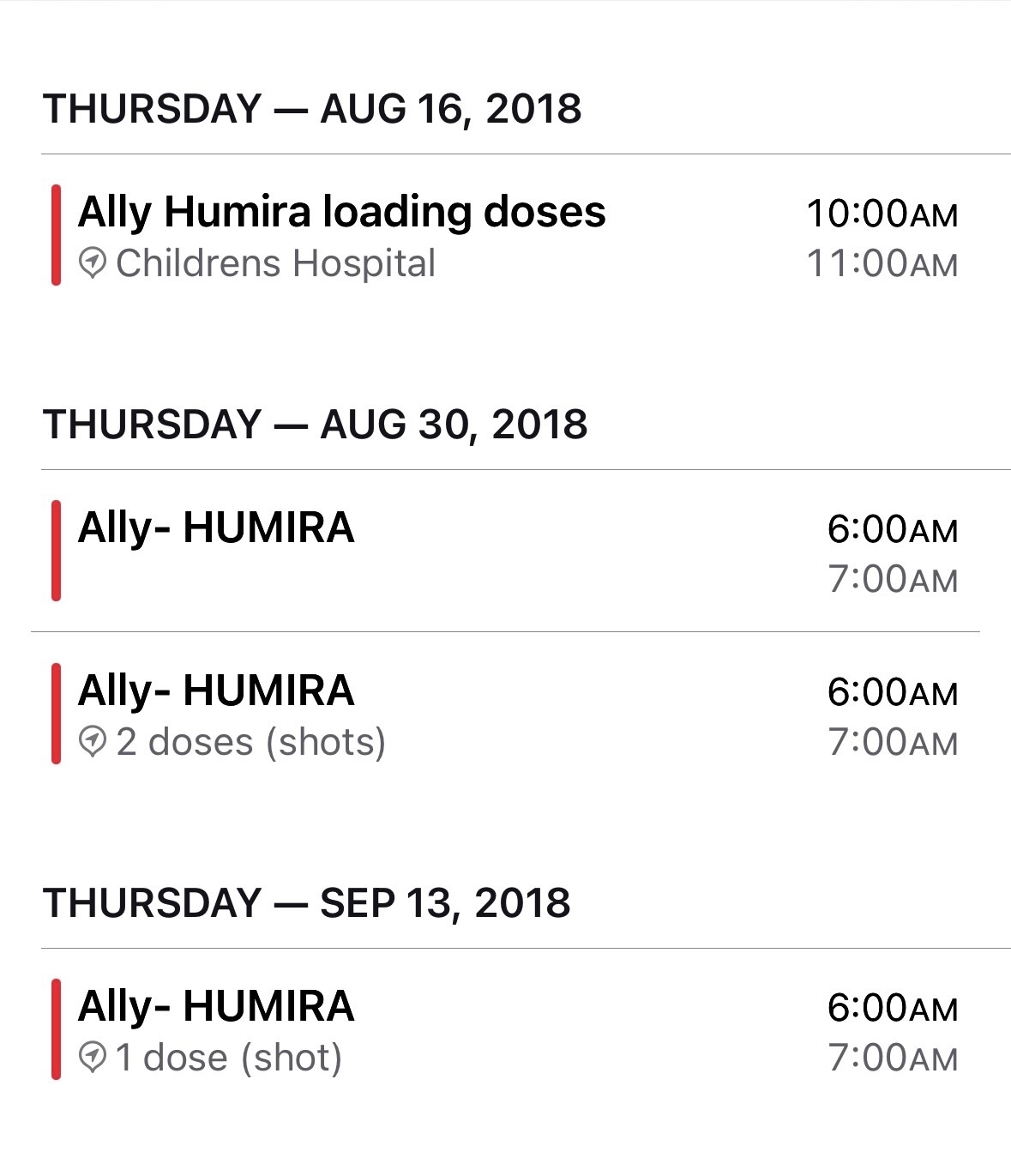
Humira treats a variety of autoimmune diseases, like ulcerative colitis, Crohn’s disease, arthritis, and psoriasis. For ulcerative colitis patients specifically who experience moderate to severe symptoms, Humira is generally considered a safe and effective treatment. Patients who take Humira can experience short-term and long-term relief. Humira functions by slowing down overactive immune systems and is administered by injection (Cleveland Clinic). Due to the fact that Humira can decrease the strength of the immune system, infections are a common side effect, as well as possible allergic reactions, bruising, bleeding, or unusual fatigue.
Golimumab (Simponi)
Simponi is typically a safe treatment for those with moderate to severe ulcerative colitis and is “…a fully human monoclonal antibody that binds to both membrane-bound and soluble anti-TNF” (Cunningham et al). Additionally, Simponi has been found to induce remission, mucosal healing, and improve quality of life after about 6 weeks on the medication (Humza et al). Similarly to Humira, Simponi can be self-administered by injection, allowing patients more flexibility and independence. The Simponi doses are more infrequent compared to some other biologics, increasing convenience for patients. A significant problem with Simponi is the decrease in effectiveness over time, which could be due to the “…formation of antidrug antibodies, as the drugs evoke an immune response”; the loss of response may be improved with dose escalation, but it trickier with Simponi to increase dosage because it is not within license (Cunningham et al).
Vedolizumab (Entyvio)
Entyvio treats both forms of inflammatory bowel diseases (ulcerative colitis and Crohn’s disease). Administered by injection or infusion, Entyvio functions by decreasing digestive tract inflammation. Entyvio works by blocking proteins on the surface of particularly inflamed white blood cells in the gut (European Medicines Agency). A critical component of Entyvio is cost; it is an incredibly expensive treatment because it is used to eliminate symptoms for the long-haul. However, Entyvio is highly cost effective, as it significantly increases the quality of life in patients compared to other biologics (Humza et al). For those who can afford it or have stable insurance, Entyvio may be a suitable fit.
Ustekinumab (Stelara)
Stelara has the capability to treat numerous inflammatory conditions, such as psoriasis, arthritis, and inflammatory bowel disease and is administered through subcutaneous injection or infusion. Many different proteins that occur naturally in the body are responsible for inflammation, specifically “interleukin 12 (IL-12) and interleukin 23 (IL-23) have been implicated as important contributors to the chronic inflammation that is a main feature of ulcerative colitis” (Stelara Info). Stelara reduces inflammation in the gastrointestinal tract by targeting those 2 particular proteins, which distinguishes it from other biologics. Stelara can negatively impact the immune system, causing potential infections, allergic reactions, stomach or joint pain, fever, and fatigue.